Where it hurts
Low back
Where it often starts
Hip rotation deficit
Low back pain in golfers often starts with limited hip rotation.
Philosophy
Your body is one complex, interconnected system. A nagging shoulder may trace back to a stiff upper back, and a painful knee may start at the hip or foot. Rather than chasing the point of pain, we look at how your whole body moves to find the root cause of the dysfunction. Fixing the source, not just the symptom, is how we keep the problem from coming back.
Pain is often the signal, not the source.
The Chain Reaction
Where it hurts
Low back
Where it often starts
Hip rotation deficit
Low back pain in golfers often starts with limited hip rotation.
Where it hurts
Elbow
Where it often starts
Shoulder dysfunction
Elbow pain in tennis players can be caused by rotator cuff and scapular weakness.
Where it hurts
Knee
Where it often starts
Hip strength asymmetry
Runners with knee pain are often dealing with a hip strength deficit.
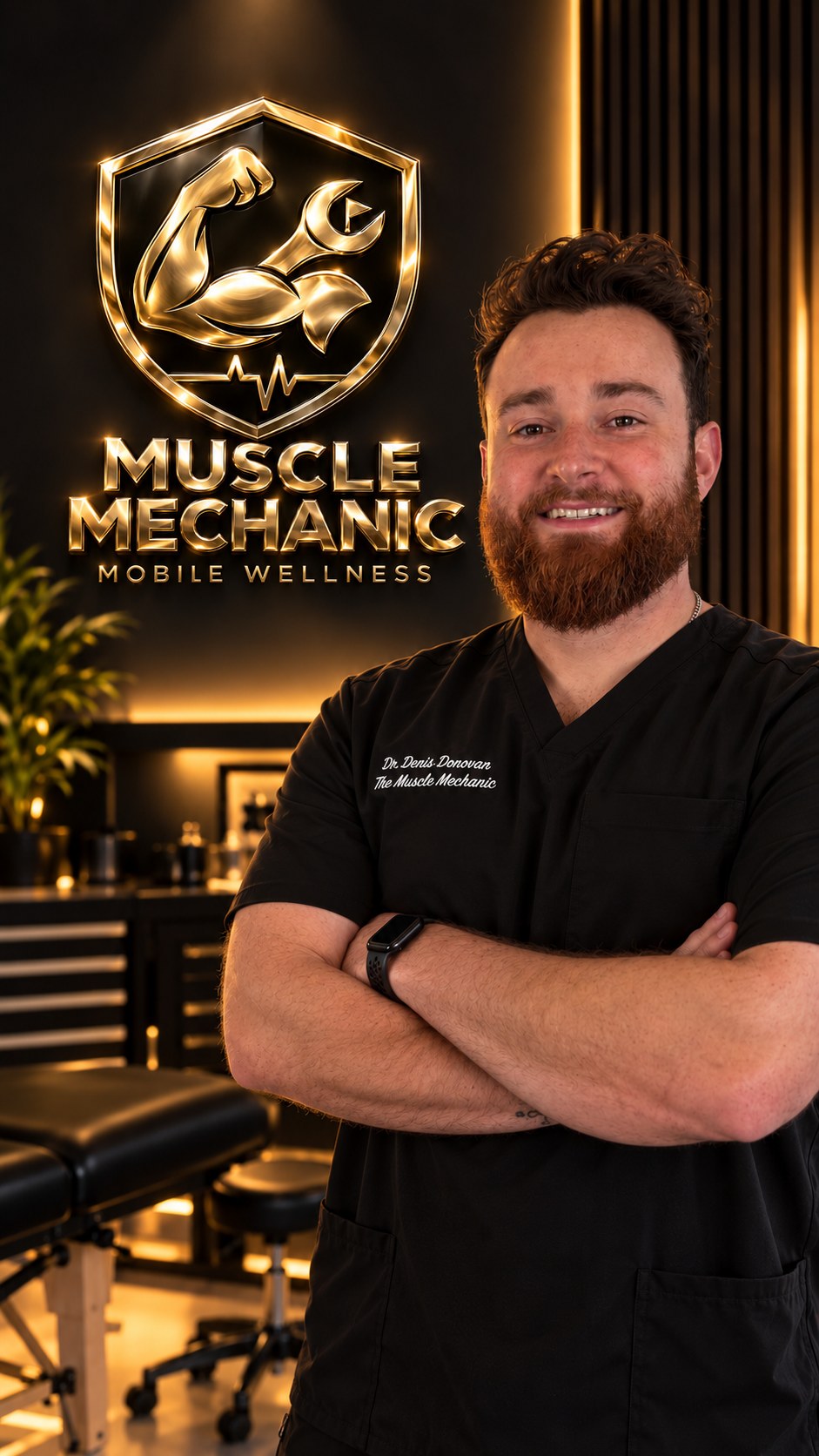
Denis believes better outcomes come from combining sound clinical reasoning with the right tools at the right time. His approach is not about chasing trends. It is about using rehabilitation, recovery, performance training, and modern technologies in practical, meaningful ways.
“The modalities open the door, the loading is what builds capacity and resiliency.”
Your Care
Your first visit
Your first session is a full 60 minute evaluation. We'll talk through your history and goals, assess how you move, and test strength and mobility with objective tools. You'll leave with a clear explanation of what's going on, a plan, and a starting point you can act on right away.
Every visit after
Treatment combines hands on care, targeted technology when it helps, and progressive exercise. We retest regularly, so decisions are based on data rather than guesswork.
Telehealth visits
Secure video sessions for consultations, follow ups, exercise progressions, and program check ins between in person visits. Telehealth is available to patients located in Florida and New York.
Movement is medicine, and passive rest is rarely the answer.
Explain the why, so patients understand their bodies.
Use technology to support clinical reasoning, never to replace it.
Measure progress, don't assume it.